
Main Course Recipes
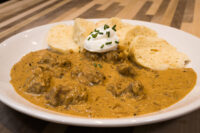
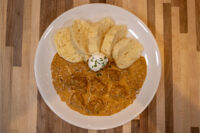
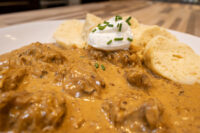
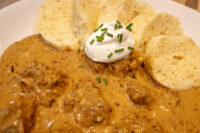
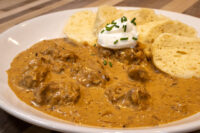
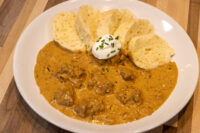
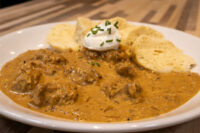
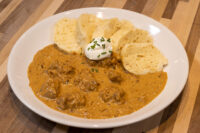
Szegedin Goulash
4 servings
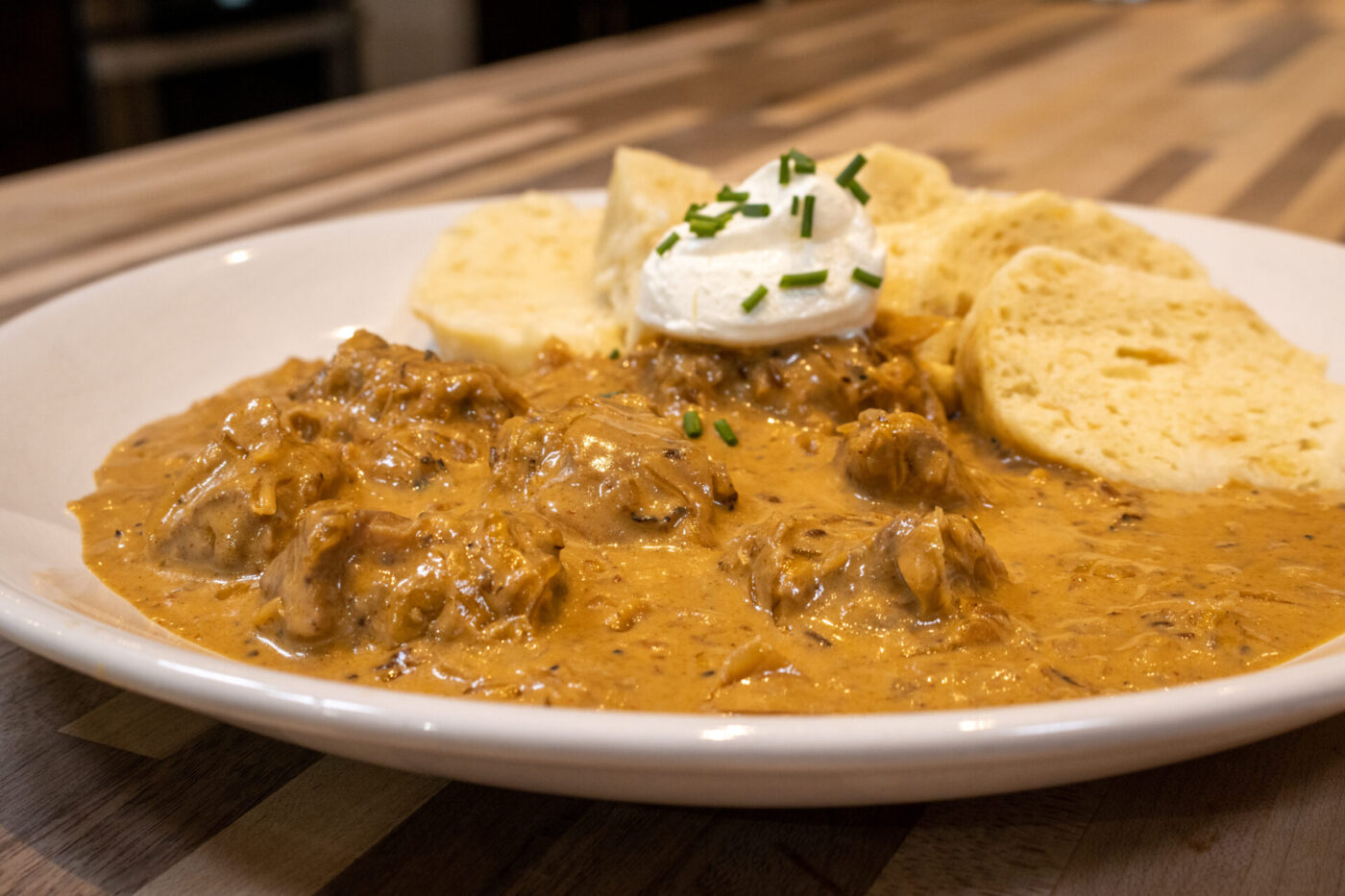
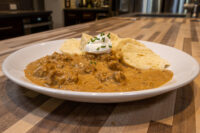
I'm so excited to share my very own Szegedin Goulash recipe with you. This goulash originated in Hungary but has become a true staple of Czech cuisine, and my version is a Czech take on this classic. My Szegedin Goulash is the perfect, decadent combination of tender pork, tangy sauerkraut, and rich heavy cream, all balanced perfectly. It's a truly hearty stew that I'm sure will become a new favorite comfort food for you and your family. This pork and sauerkraut stew is a complete meal that will hardly ever have competition. Read More
Main Course Recipes
Before You Start
Let’s talk about important parts of the recipe before you start…
Welcome to my Czech take on Szegedin Goulash!
Hello, I’m Tom the Chef, and I’m welcoming you to my recipe for what might be your new favorite goulash. While this dish originated in Hungary, it has become a beloved part of Czech cuisine, and I am sharing my personal version with you. This Szegedin Goulash recipe is a wonderfully decadent and well-balanced meal. I find it’s the perfect combination of flavorful pork, zesty sauerkraut, and luxurious heavy cream. I’ve designed this goulash recipe to be the ultimate hearty stew. When you’re looking for true comfort food, my pork and sauerkraut stew is the answer. I love to pair this meal with a side of dumplings, and I hope you’ll give my Czech take a try!
Preparing the Pork for my Szegedin Goulash
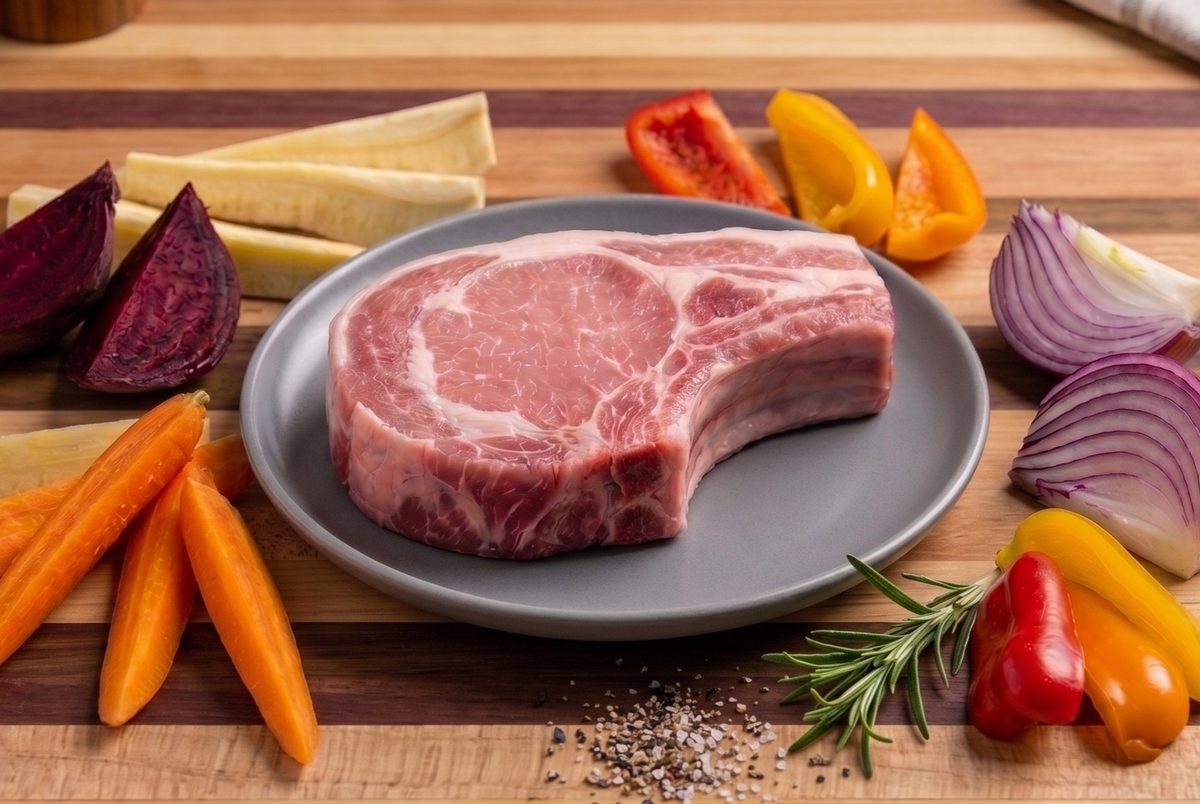
The first key step in my Szegedin Goulash recipe is preparing the pork. I specify using 1 LB of Boston pork butt, which you might also know as top pork shoulder. I find this cut is ideal because it has enough fat to keep the meat tender and flavorful during the long simmering process, which is essential for this hearty stew. You’ll want to cut the pork into medium, 1-inch cubes. Before that, make sure to rinse the meat under cold water and remove any parts you don’t want. Once cubed, I have you generously season the pork with salt and freshly ground pepper. A tip I’ve included is that if you want your meat to be even more tender and just fall apart in your mouth, you can let this seasoned pork rest for up to an hour at room temperature (as long as it’s below 72°F and the meat is covered). This little bit of patience really pays off in the final texture of the pork in our Szegedin Goulash.
The Sautéing Sequence: Building Flavor
The next crucial part of my goulash recipe is the sautéing process. I don’t just throw everything in the pot; I build layers of flavor. I start by preheating a large pot with frying oil or lard and sautéing the two finely chopped medium onions. You’ll want to cook them, stirring occasionally, for about 3-4 minutes until they’re glossy. This creates a sweet, aromatic base. Only after the onions are ready do I add the ½ LB of drained sauerkraut. I sauté this with the onions for another 1-2 minutes. This step helps to slightly caramelize the sauerkraut and meld its flavor with the onion, which is a key part of my Czech cuisine approach to this pork and sauerkraut stew.
Blooming the Paprika Correctly
This step is perhaps the most important for getting that classic goulash flavor and color, and it’s a key part of my Szegedin Goulash recipe. After sautéing the onions and sauerkraut, I have you add the 4 teaspoons of ground paprika. The recipe calls for constant stirring for about 1 minute. This is called ‘blooming’ the paprika. You are cooking the spice directly in the hot oil, which unlocks its deep, rich color and full, complex flavor. You must stir constantly and only do it for about a minute, as paprika can burn very easily. If it burns, it will become bitter and ruin the entire dish. This step is essential for achieving the authentic flavor from the paprika that this dish is known for, even in my Czech take.
Adding the Meat, Flour, and Sauerkraut
Right after blooming the paprika, the recipe moves fast. I have you add the seasoned pork cubes directly into the pot with the onion, sauerkraut, and paprika mixture. You’ll sear the meat with constant stirring for 2-3 minutes, just until it gets a nice seared color on the outside. This locks in some of the juices. Immediately after searing, I have you dust everything with ¼ cup of all-purpose flour and stir it all together thoroughly. This flour is what will thicken our Szegedin Goulash later on, creating that wonderful, comforting, thick sauce for our hearty stew. This combination of searing the meat and toasting the flour right in the pot is a critical technique for my goulash recipe.
Simmering the Goulash to Perfection
Once the meat is seared and the flour is stirred in, it’s time to turn it into a stew. I have you add 4 cups of beef broth, 2 bay leaves, 1 teaspoon of whole caraway seeds, and 3 cloves of grated garlic. The caraway seeds are very traditional in Czech cuisine and add a specific flavor that I love. You’ll stir everything thoroughly, cover the pot with a lid, and bring it to a simmer. A simmer is about 195°F, not a rolling boil. Then, you lower the heat and let it cook for about 60 minutes, stirring occasionally. This low and slow cooking is what makes the pork shoulder incredibly tender and allows all the flavors of the pork, sauerkraut, and spices to meld together. This is where the magic happens and it becomes a true comfort food.
Finishing with Heavy Cream
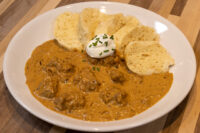
The final touch is what makes my Szegedin Goulash so decadent. After the hour of simmering, I have you remove and discard the bay leaves. Then, you’ll increase the heat to medium-high and pour in 1 cup of heavy cream, along with the final salt and pepper. The heavy cream balances the acidity of the sauerkraut and the richness of the paprika, creating a smooth, creamy, and beautifully colored sauce. You’ll cook this for about 5 more minutes, stirring, to fully combine it. This step transforms the hearty stew into something truly special. I also mention that you can serve it with an *optional* dollop of sour cream, but this is a modification not in the main recipe, as the heavy cream is cooked directly into the goulash itself, which is a key part of my pork and sauerkraut stew.
Popular questions
Do I need to rinse the sauerkraut for this Szegedin Goulash recipe?
That's a great question! For my specific Szegedin Goulash recipe, I instruct you to use ½ LB of sauerkraut that is drained. I make a specific note in the ingredients list to drain it and not reserve the liquid. The recipe does not call for rinsing the sauerkraut. By just draining it, we keep that wonderful tangy flavor that is so essential to this pork and sauerkraut stew, and it balances perfectly with the rich pork and the final addition of heavy cream. So, just drain it well, and you'll be on your way to making the perfect hearty stew.
Szegedin Goulash
Ingredients:
Click any ingredient to learn morePork:
1 LB boston pork butt (top pork shoulder) (boneless)
pepper - ideally freshly ground
Sauerkraut & sauce:
4 TBSP of frying oil (any kind) (adjust if needed, or lard)
2 onion - peeled and finely chopped (medium size)
½ LB of sauerkraut - drained, don’t reserve liquid
4 TSP of ground paprika
¼ cup of all-purpose flour
4 cups of beef broth/stock (or chicken broth/stock)
1 TSP of caraway seeds - whole
3 cloves of garlic - peeled and grated (or pressed)
1 cup of heavy cream
½ TSP of salt
½ TSP of pepper - ground
Final touch:
Nutrition per 1 Serving:(recipe split into 4 servings)
EstimatedCalories 646
Protein 29.1 g
Fat 50.2 g
Saturated fat 20.0 g
Carbohydrate 22.0 g
Sugars 6.9 g
Fiber 4.8 g
Sodium 1140 mg
Cholesterol 138 mg
Estimated. Worked out from the ingredients above using the United States Department of Agriculture’s FoodData Central reference data. An estimate, not a measurement — brands, sizes and how much of a marinade actually ends up on the plate all move it.
Directions:
1.Meat Preparation:
Let’s start preparation of Szegedin Goulash with meat preparation.
1.1.
Make sure that the meat is properly rinsed under cold water and that the unwanted parts are removed.
1.2.
Cut the meat into medium cubes (preferably 1″ cubes) and place them on a plate.
1.3.
Generously salt and pepper. Set aside for a later step.
Tip:
If you want your meat to be even more tender and falling a part in your mouth, let the meat prepared in this step to rest up to 1 hour before using in later steps. Make sure that your room temperature is lower than 72°F, that the meat is covered with food wrap, and that you are using fresh high-quality meat. Disclaimer: Failure of some of the aforementioned steps may increase the chance of food poisoning.
2.Sauté:
2.1.
Preheat a medium pot on medium-high heat with 4 TBSP of frying oil and add:
2 medium onions – finely chopped
Sauté with occasional stirring until glossy (about 3 – 4 minutes).
2.2.
Add:
½ LB sauerkraut
Sauté with occasional stirring for 1 – 2 minutes.
2.3.
Add:
4 TSP of paprika
Sauté with constant stirring (about 1 minute).
2.4.
Add:
Meat from the step 1.
Sear the meat with constant stirring until it gets a nice seared color (about 2 – 3 minutes).
2.5.
Then, dust with:
¼ cup of all-purpose flour
Thoroughly stir together until nicely combined.
3.Stew:
3.1.
Add:
4 cups of beef brothz
2 PCS of bay leaves
1 TSP of whole caraway seeds
3 cloves of garlic – grated
Thoroughly stir, cover with a lid and bring to a simmer (about 195°F) with occasional stirring.
3.2.
Lower heat to medium and cook for about 60 minutes with occasional stirring.
Note:
Optionally, add water during stewing to dilute the goulash (if thickening too much).
4.Final Touch and Serve Szegedin Goulash:
4.1.
Remove and dispose of bay leaves.
4.2.
Increase heat to medium-high and add:
1 cup of heavy cream
½ TSP of salt
½ TSP of ground pepper
Thoroughly stir.
4.3.
Cook with occasional stirring until fully combined (about 5 minutes).
Note:
At this point, your goulash should have a nice thick consistency, but since this is a European meal, do not expect it to be too thick. If you prefer a thicker goulash, just simply extend the cooking time.
4.4.
Taste and add salt and pepper if needed.
4.5.
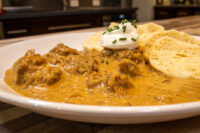
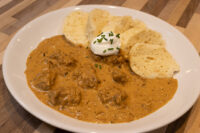
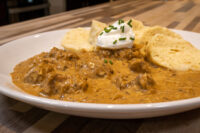
Serve topped with slices of raw (or sauteed) onion and with a a side of dumplings, pasta of any kind, or bread. Optionally add a dollop of sour cream.
Kitchen Guide
Pork and Veal (steaks, chops, roast)
The USDA minimum safe internal temperature is 145°F.
Popular serving temperatures:
- 120 – 130°F – Rare
- 130 – 135°F – Medium Rare
- 135 – 145°F – Medium (most popular, especially by chefs)
- 145 – 155°F – Medium Well
- 155°F and more – Well Done

Share
Click on the icons below to share "Title of the item to share"